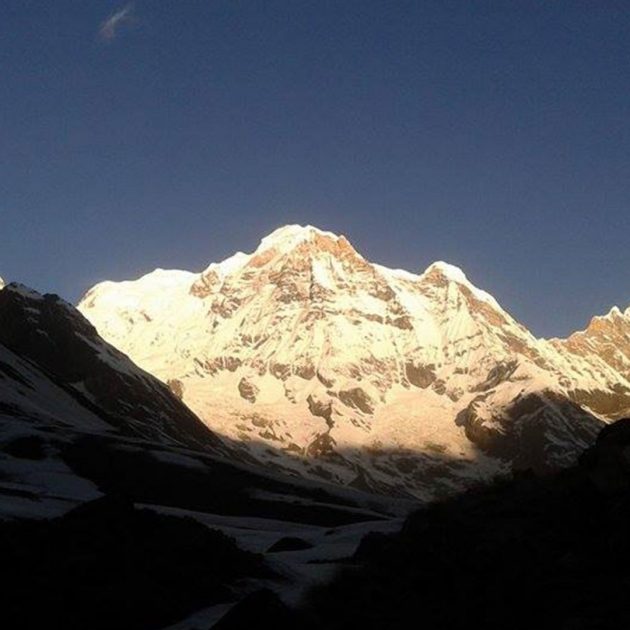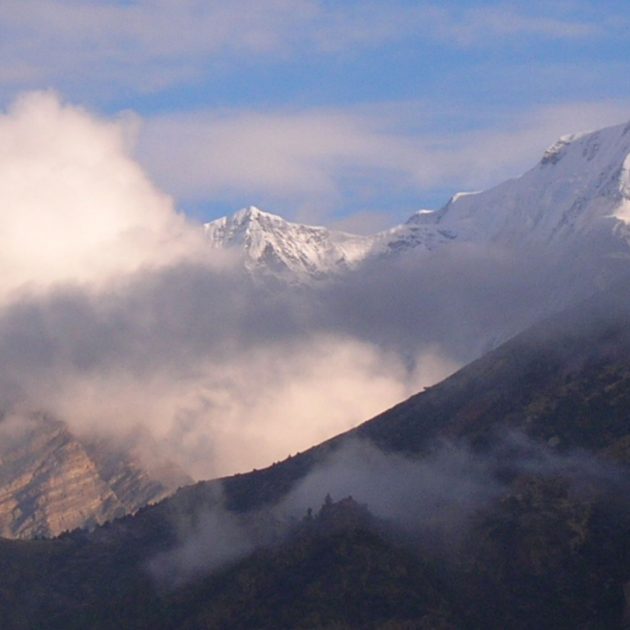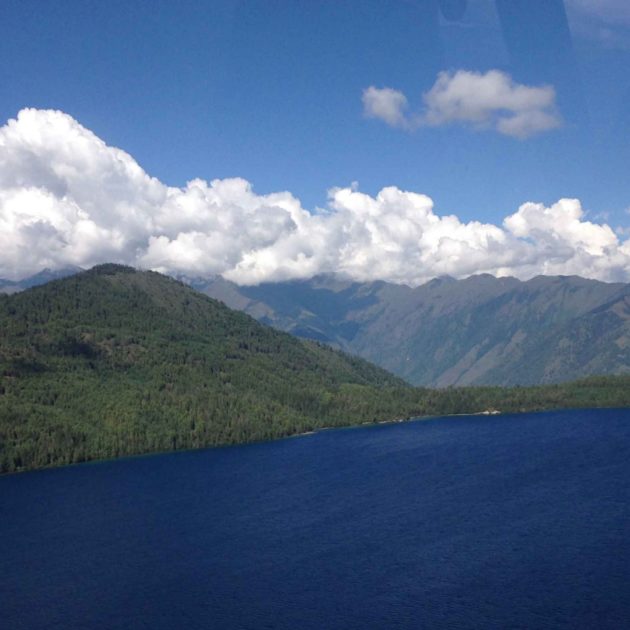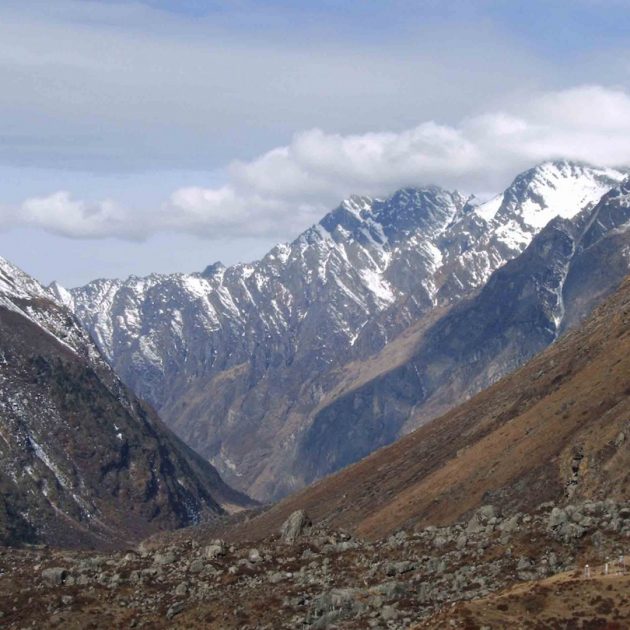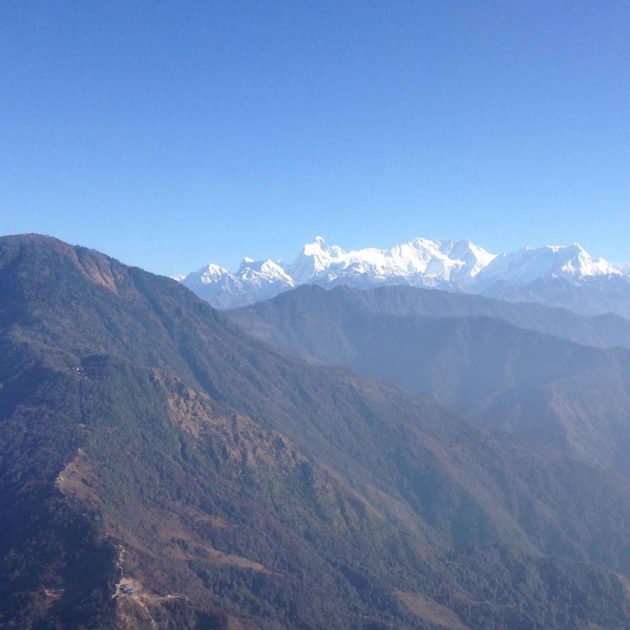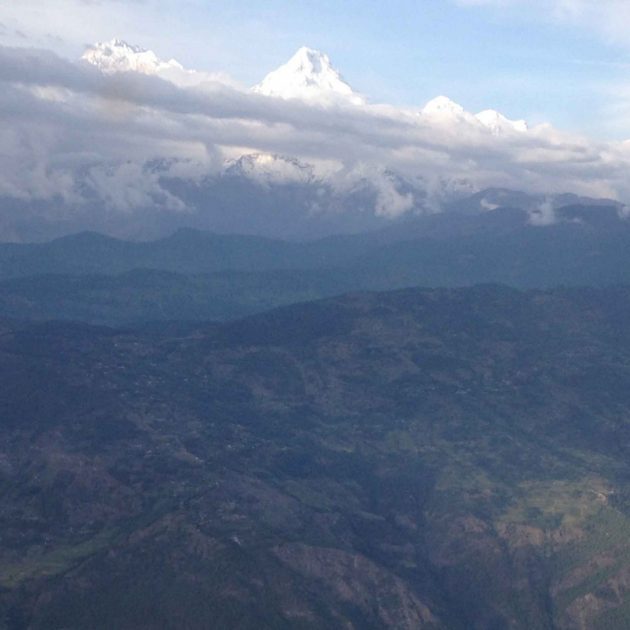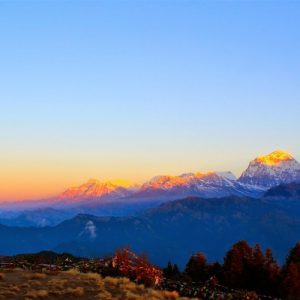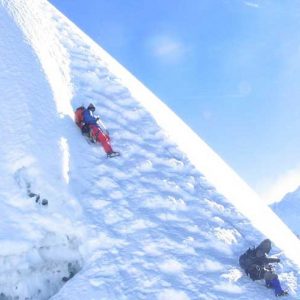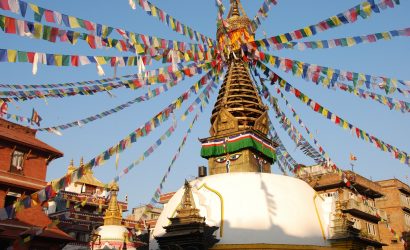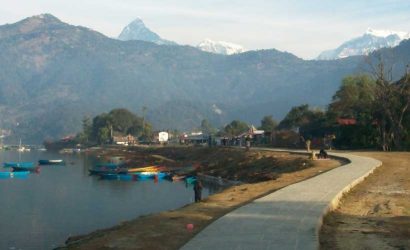
Day 01: Drive from Kathmandu to Beshishahar (823m.) which takes about seven hours. You drive along the Kathmandu-Pokhara Highway to Dumre and then follow the narrow and paved road by the Marsyangdi River to Besi Sahar (823m.). It takes almost 6 hours. Beshishahar is the district headquarters of Lamjung district. All the local government offices are situated here. From here, you can see some of mountain peaks, natural sceneries surrounding the valley and the daily activities of local people. This headquarter is the centre from where the daily usable commodities are supplied to the different villages and numerous towns.
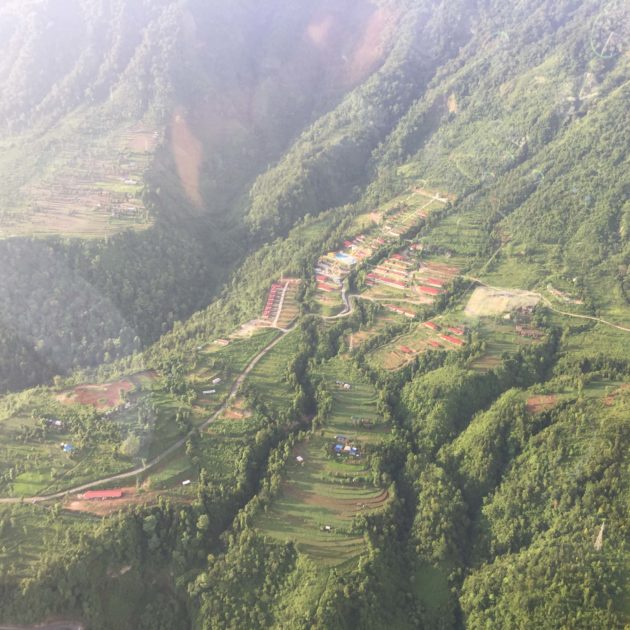
Day 02: Trek from Beshishahar to Nagdi (1050m.) which takes about four and half hours. The first part of the trail passes through flat level along the bank of the Marshyangdi River. You can enjoy the sceneries and the local culture of Gurung community. Here you walk through the rice terrace fields with the good views of various mountains.
Day 03: Trek from Nagdi to Jagat (1800m.) and it takes about six hours. A steep trail ascends from Nagdi, through rice terraces, before crossing a stream at the bottom of a small waterfall. It then climbs again and traverses the hillside high above the river before reaching the village of Lili Gaon. Ahead, the Marsyangdi valley forms a steep V-shape, and you follow the winding mountain path down through Syange and along the river for some distance. The trail then climbs steeply and the path is cut into the sheer cliff-face some 200-300m above the riverbed. Eventually you descend to the stone village of Jagat, situated on a shelf, which juts into the precipitous Marsyangdi valley. You stay overnight at tea house (lodge).
Day 04: Trek from Jagat to Dharapani (1943m.) which takes about six hours. The trail from Jagat descends until it almost reaches the river and then begins to climb again through a forest. The sheer cliff on the opposite bank plunges downward but this side is also steep. When the climb ends, you follow a level track to Chyamje, which is marked by a magnificent waterfall on the opposite bank. After descending to the river and crossing a suspension bridge, you begin a climb to Sattale on a path so steep that it seems one slip would send you hurtling down into the valley. You continue on an undulating path above the river, and at one point, where a tributary flows in from the opposite bank, the main river becomes covered with huge boulders that hide the water. Climbing the zigzag path to the top of the hill, you see the level, plain of Tal before us. Though it is enclosed by cliffs, the level area looks reassuring after the harrowing mountain paths just travelled on. You descend to a grassy riverbank, which leads to Tal with its hotels and teahouses. Here you can enjoy the exhilarating water fall. Beyond Tal, the valley narrows and the path becomes high and winding, and in several areas hewn from the rock itself. Beyond the small village of Karte, there is a bit more cliff-walking before the path drops again to the river. You cross a suspension bridge, and climb the short distance to the stone kani marking the entrance to Dharapani, and your camp for the night.
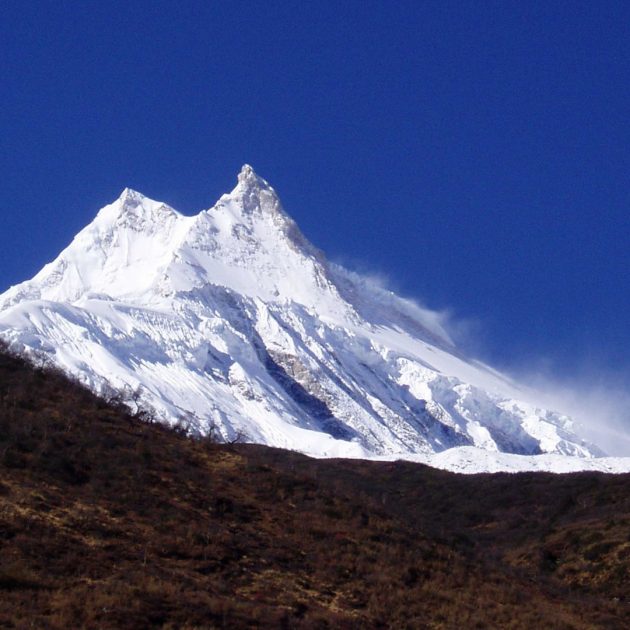
Day 05: Trek from Dharapani to Chame (2713m.) which takes about four hours. As you cut through a narrow field from the village, the Dudh Khola, which originates from the south face of Manaslu, enters on the opposite bank. The Marsyangdi then veers to the left, and as Annapurna II becomes visible ahead, you arrive at Bagarchhap, a Bhote village with prayer flags fluttering in the breeze. Continuing to climb through forests of pine and oak, you pass through Dhanakyu before coming to a thundering waterfall. Further on, the Marsyangdi Khola enters a gorge and the path consists of steep stone steps. Pausing for breath, you can look back for views of Manaslu. When the steep incline ends you follow a path amid magnificent rhododendrons to Ratamron and then continue on a gently rising path, crossing a stream before entering a pine forest. You then cut across a loose hillside to the hamlet of Kotho from where you can look straight up at nearby Annapurna II - a sight convincing us that you are deep in the Himalayan Mountains! From here the trail climbs through a fir and pine forest to Chame where there are government offices, shops, and hotels. Chame is the administrative headquarters for the Manang district.
Day 06: Trek from Chame to Pisang (3155m.) and it takes about five hours. With Lamjung Himal (6893m) sparkling in the morning sun, you set off for Pisang. The mountain disappears as you climb the path up the valley, passing a huge apple orchard. You continue through a fir and pine forest, climbing to a high, rocky area as the opposite bank becomes an impassable cliff. From this point, the valley becomes extremely steep-sided as you follow the path to Bratang. In the past this was the military station for troops who fought against the Khampa tribal revolution, but the dilapidated buildings are all that remain of that era. A short climb from the village brings you to a rock-strewn area where you cross a wooden bridge and follow a high, winding path, before crossing back to the right bank again. You now walk through a pine forest and as the forest ends, the valley changes from a V-shape to a gentle U-shape, opening up a wonderful vista before us. You can see the east peak of Annapurna II as well as Pisang Peak to the north-east. Continuing on, you come to a long mani wall by a bridge and the lower village of Pisang.
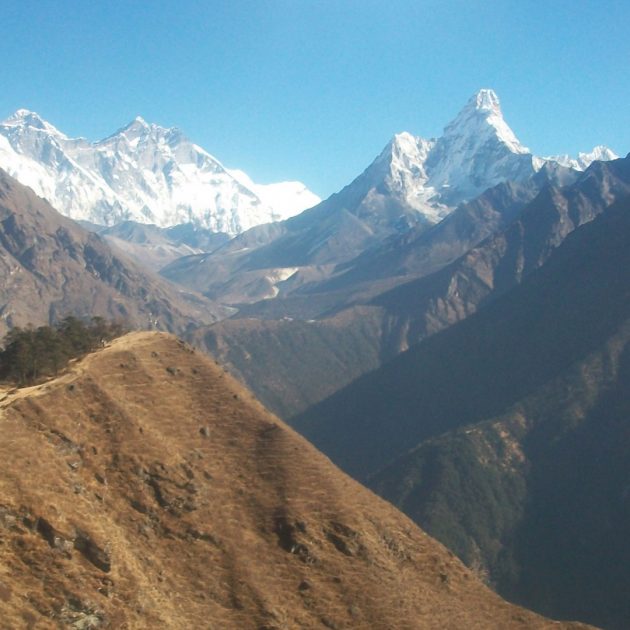
Day 07: Trek from Pisang to Manang (3351m.) which takes about five hours. Beyond Pisang, the trail climbs a steep ridge, which affords good views of the Manang valley and Tilicho peak. Descending past Manang's airstrip at Hongde, you come to a level area from where the north-east face of Annapurna III rises majestically above you. From the wide plains of the Sabje Khola Valley, Annapurna IV (7525m.) also becomes visible. Just beyond this point you cross the considerably reduced flow of the Marsyangdi Khola via a wooden bridge to the tiny village of Mungji. Cultivated fields appear on both sides of the path and off to the right, below a craggy mountain, you can see the village of Bryaga with its splendid monastery. Large chortens and mani walls abound and the tall peaks of the Himalaya spread out before us - Annapurna II, Annapurna III, Annapurna IV, Gangapurna (7455m.) and, to the rear, Tilicho Peak (7134m.). After a short steep climb you reach Manang which is a surprisingly large village for this remote mountain region. You camp here for the night, amidst the fluttering prayer flags which adorn the houses.
Day 08: Rest day at Manang for acclimatization. This is an important rest and acclimatization day today before crossing the Thorung La. There are optional day walks such as crossing the river to see the tremendous ice-fall coming down from the Annapurnas, or climbing high above the village for a full panorama of the Annapurna range and the Manang Valley. There is also a Himalayan Rescue Association [HRA] aid post in the village which makes an interesting and educational visit.
Day 09: Trek from Manang to Yak Kharka (4100m.) which takes about four hours. Now the trail ascends gently all the way to Yak Kharka passing through the Gunsang (3960m.) village. En route, you can see panoramic views all the day.
Day 10: Trek from Yak Kharka to Thorong Phedi (4420m.) which takes about three hours. Leaving Yak Kharka, you climb gradually to a ridge before descending to the headwaters of the Marsyangdi and crossing via a covered wooden bridge. After a short ascent up the mountain path on the right bank, you follow a narrow trail across an unstable scree slope and then descend to Thorung Phedi.
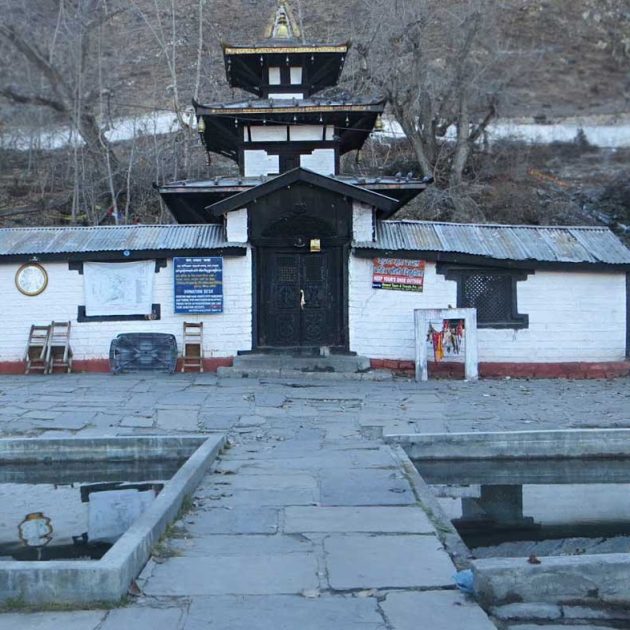
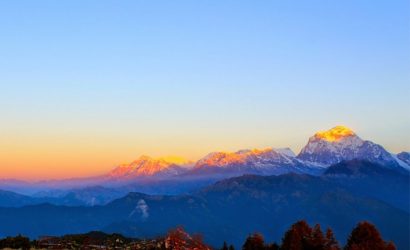
Day 11: Trek from Thorong Phedi to Thorong La (5416m.) to Muktinath (3795m.) which takes about eight hours. This is an early start today for your crossing of Thorung La [5416m]. The trail becomes steep immediately on leaving camp but as this trail has been used by local people for hundreds of years the path is well defined. The gradient then eases and after around 4 hours of steady climbing we reach the chorten and prayer flags of the pass. The views are dramatic to say the least, from the snow covered mountains above, to the head of the Kali Gandaki valley below and the brown and purple hills of Mustang which are spread out before us. The descent to Muktinath is a knee pounding 1600m but it's compensated for with excellent views of Dhaulagiri. Eventually the moraines give way to grassy slopes before a pleasant walk along the Jhong Khola Valley to Muktinath and its shrines and temple.
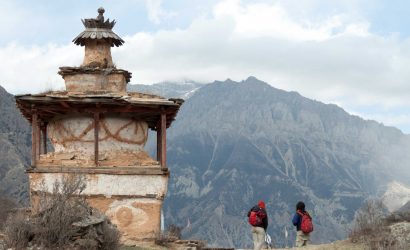
Day 12: Trek from Muktinath to Kagbeni (2895 m.) and it takes about four hours. You now begin the trek descent down the dramatic Kali Gandaki Gorge, initially through arid country in the same geographical and climatic zone as Tibet. After passing through Jharkot and Khingar, villages with typical Tibetan architecture, we follow path steeply down to Kagbeni, a primitive village famous for Tibetan architectures. People living there follow the Tibetan life style and culture. There is situated a monastery said to belong to 15th Century.
Day 13: Trek from Kagbeni to Jomsom (2713m.) which takes about three hours. Your trail passes through the bank of Kali Gandaki passing through the Eklebhatti. The trail is windy after late morning. The river flows through broader course. Jomsom is the headquarters of Mustang and it is split into two towns and between these two towns passes through Kali Gandaki river. There is access of internet and banking facilities. From Jomsom, you can enjoy the magnificent views of Nilgiri and Tilicho peak. Here you stay overnight at hotel.
Day 14: Fly from Jomsom to Pokhara which takes about 35 minutes. The flights are available during the morning time. The strong breeze blows during the after and frequent change of the weather prevent the flight being landed and taken off in the afternoon. During the flights in morning, the sky looks very clear which makes you able to enjoy the splendid views of different mountain peaks.
Day 15: Drive from Pokhara to Kathmandu by tourist mini bus, which takes about seven hours. While driving from Pokhara to Kathmandu, you head up to Damauli,, Dumre, Muglin and Kurintar where the Nepal's first Cable car is operated to reach to Manakamana Temple. En route, you could enjoy the mountain views, green sceneries, rice terrace fields, vegetable fields and people being engaged in their daily life activities. From Naubishe you climb up to Thankot, the gateway to capital city. You can also fly from Pokhara to Kathmandu which takes about 25 minutes.